
Well-planned restaurant designs contribute to the success and the profits of any dining establishment (for all segments and categories: QSR, fast-casual, family restaurants, etc.) Planning your design begins with market research, continues with understanding market trends, and concludes with strategic execution.
Design has made its mark on the restaurant industry with concepts like the Rainforest Café, Planet Hollywood, and Mars 2112. Of course, it’s not necessary to wrap your restaurant interior design around a space-aged theme to provide a pleasant atmosphere for guests. The point is the design should cater to the tastes of its target market.
The way a restaurant is designed has a dramatic impact on the type of guests the restaurant attracts. The Rain Forest Café’s restaurant interior design, for example, appeals to environmentally-minded guests who enjoy a nature-made experience, while the 50’s Prime Time Café at Disney’s Hollywood Studios appeals to guests who get a kick out of a blast from the past.
Creative design, however, does not require a million-dollar investment if you understand the nuances of consumer marketing.
Design experts with specific expertise in the restaurant industry are equipped with the knowledge and skill to create a dining experience that fosters word of mouth marketing long after the meal is over and guests have left the dining room.
When it comes to designing a restaurant, not just any designer will do. Restaurants require a different flavor, a different flare and different experience than the average residential interior designer or corporate designer has to offer.
To be sure, designing a restaurant requires an in-depth understanding of how restaurants flow, how employees will interact with the design, and how site architecture could impact the design. The most successful restaurant design, blended with irresistible food and impeccable service, breeds repeat guests, spirited employees and greater profitability.
We rounded up some of our best insights on how to design a restaurant to give restauranteurs a better idea of what’s involved.
When opening a new restaurant, building first and asking questions later is expensive, and with some guests you only get one chance to get it right. From restaurant branding and interior decoration to silverware and signage, we present 18 design tips for restaurants to stand out when launching a new concept.
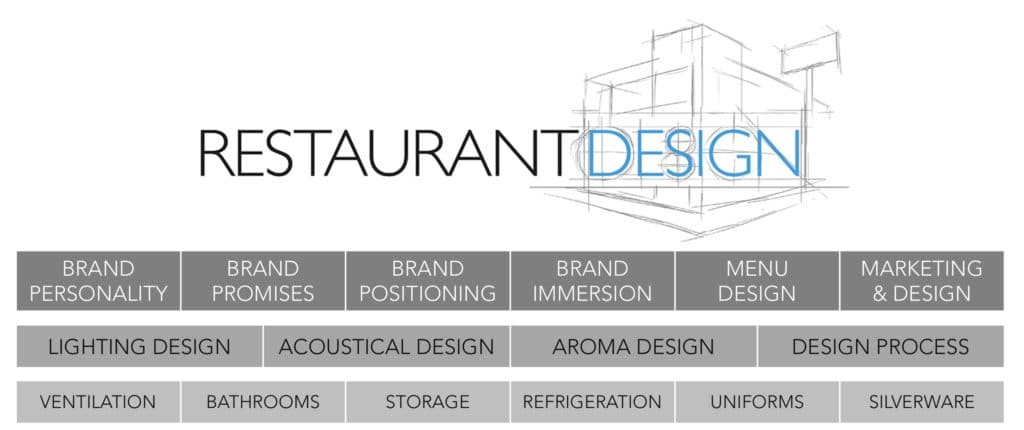
In this article we provide insight into the considerations and complexities of designing a restaurant as they relate to both independents as well as multi-national chains pursuing renovations and new growth concepts.
Walking inside a restaurant is like walking into the belly of an advertisement. Everything communicates. Unlike typical ads which often just engage one, two, or three senses maximum, a restaurant engages all five of the human senses. This raises the stakes substantially on customer expectations and performance levels necessary to compete effectively today. We rounded up some of the most common restaurant interior design mistakes.

Restaurant’s specific needs need to be considered before jumping into the design process. Restaurant floor plans and layouts should be influenced by business plans and branding strategy and kitchens, restrooms, and seating have to be optimized for efficiency.
To be sure, restaurant interior design requires an in-depth understanding of how restaurants flow, how employees will interact with the design, and how site architecture could impact the design. The most successful designs will blend with irresistible food and impeccable service, breeds repeat guests, spirited employees, and greater profitability.
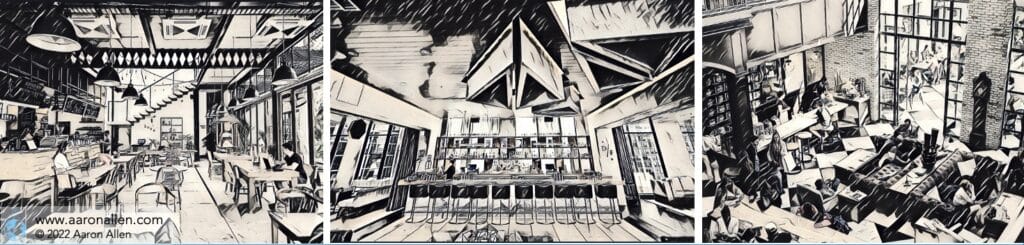
The pizza restaurant industry sells about $145b worth of pizza each year globally. In the U.S., close to 60% of pizzerias are chains. In this context, it can be hard to differentiate. Being “inviting” is not enough. We present some pizza design ideas and novel design elements that can be considered in remodeling a restaurant.
We present examples of innovative hotel restaurant designs that maximized their available space, improved revenue with higher table turnover, and achieved excellent guest scores.
The way of thinking about lodging has gotten much more creative in the last few years. In this article we present innovative hotel design ideas that can inspire your concept development.
Branding every element of your operation is key to creating an image that stands apart from the crowd. Restaurant uniforms are a great opportunity for branding.
In today’s day and age, your website is often the first experience customers have with your brand. An overwhelming 77% of diners will check a restaurant’s website prior to visiting, and the vast majority (69%) say that experience helps them decide if they want to dine in. Your restaurant’s website design should be indicative of the type of experience you would want guests to have in-house — smooth, seamless, and user-friendly.
We present what questions to ask so that the design of your restaurant can successfully represent your brand.
Here are some of the best sites to get ideas on layout, decoration, furniture, kitchen equipment, rules of thumb, learn from mistakes, and be inspired to thinking of the design of your restaurant.
A restaurant layout is a sketch or rendering of the space indicating the areas (ordering and payment, dining, bathrooms, kitchen, storage, entertainment, management office, terrace, etc.), size and proportion, and how they will flow. Layouts need to optimize seating capacity with pick up areas, kitchen, storage, bathrooms, bar area, and server stations. Software can create very accurate 3D renderings that allow to test the experience from the eyes of the staff and the guests.
A good restaurant design will attract new guests (intrigued by what they see from outside) and repeated guests who want to go through the experience again. The design needs to follow a concrete vision and plan, defined after the brand elements.
A good restaurant layout must consider a natural flow of traffic, making it easy for guests and employees to move (think not only of the raw space but with furniture and decorative elements). The layout will work in tandem with other design elements such as style and decoration (will the restaurant have many small tables or fewer large tables?) and follow best practices in terms of spacing (people have different space needs depending on the culture).
The ultimate answer here is "it depends." The hard costs for restaurant design can range from anywhere from $85–$500 per square foot. The investment in developing a prototype can range from hundreds of thousands to millions, depending on expansion targets. Darden famously invested an estimated $20m before launching their first Seasons 52 location.
Aaron Allen & Associates works alongside senior executives of the world’s leading foodservice and hospitality companies to help them solve their most complex challenges and achieve their most ambitious aims, specializing in brand strategy, turnarounds, commercial due diligence and value enhancement for leading hospitality companies and private equity firms.
Our clients span six continents and 100+ countries, collectively posting more than $200b in revenue. Across 2,000+ engagements, we’ve worked in nearly every geography, category, cuisine, segment, operating model, ownership type, and phase of the business life cycle.
We are focused exclusively on the global foodservice and hospitality industry. You can think of us as a research company, think tank, innovation lab, management consultancy, or strategy firm. Our clients count on us to deliver on our promises of meaningful value, actionable insights, and tangible results.
Founded and led by third-generation restaurateur, Aaron Allen, our team is comprised of experts with backgrounds in operations, marketing, finance, and business functions essential in a multi-unit operating environment.
We bring practical, relevant experience ranging from the dish room to the boardroom and apply a holistic, integrated approach to strategic issues related to growth and expansion, performance optimization, and enterprise value enhancement.
Working primarily with multi-brand, multinational organizations, our firm has helped clients on 6 continents, in 100 countries, collectively posting more than $200b in revenue, across 2,000+ engagements.
We help executive teams bridge the gap between what’s happening inside and outside the business so they can find, size, and seize the greatest opportunities for their organizations.