
Learning how to market a restaurant is both an art and a science. There are several components of successful marketing strategies. This isn’t an all-inclusive list, but some top strategic restaurant marketing issues include:
There a myriad of different tactics that can be employed for a successful restaurant marketing strategy. We outline some of those here:
Only 6% of people in the U.S. and Europe trust traditional marketing, taking their cues from user-generated content instead. But viral engagement can’t be faked (even with the best restaurant promotions); it has to come from authentic connections between brands and the target audience, such as:
Local Store Marketing and Neighborhood Marketing are basically the same thing. It’s a marketing philosophy that seeks to build competitor proof relationships with customers and employees without a reliance on mass media advertising. Unless you’re one of those 100 restaurant companies that’s doing hundreds of millions of dollars in sales per year, you can’t afford not to focus on Local Store Marketing over advertising
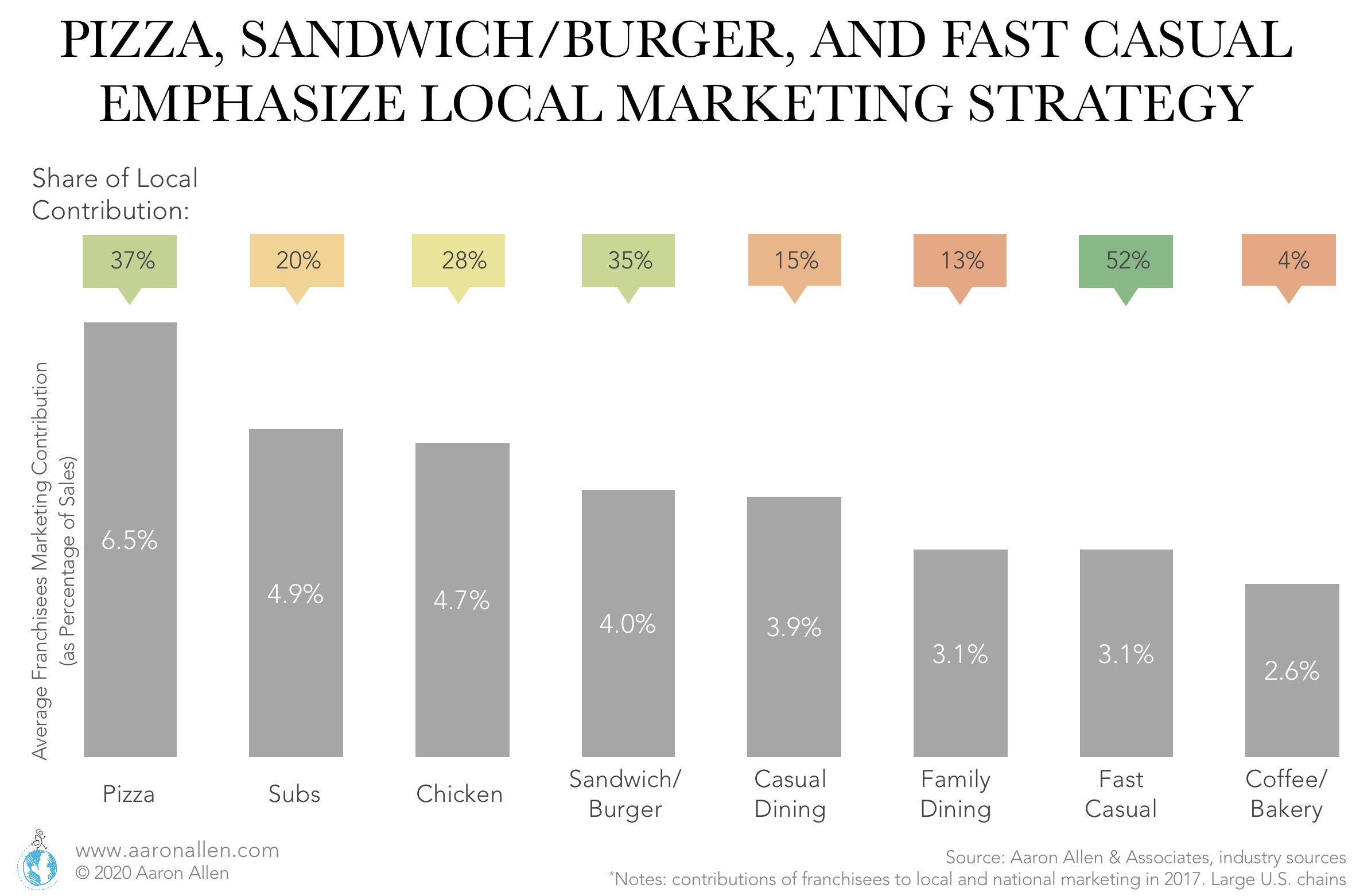
Allocations to local versus national campaigns vary depending on the segment and type of restaurant. Pizza, sandwich/burger, and fast-casual chains tend to reach consumers through local marketing. In contrast, casual dining, family dining, and coffee/bakery budgets mostly go toward national programs.
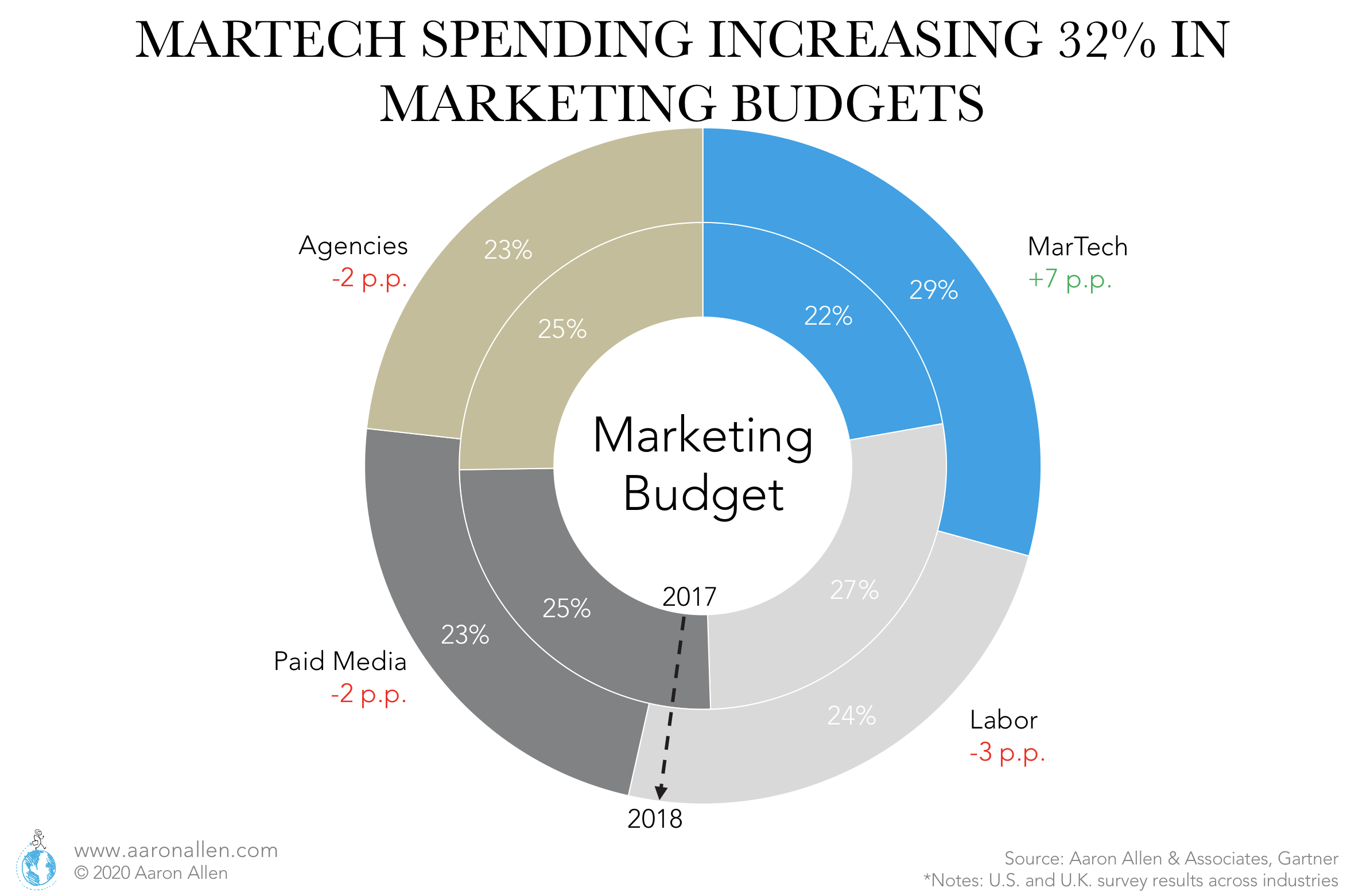
MarTech is the convergence of marketing and technology. Marketing budgets in this area increased seven percentage points between 2017 and 2018, showing that CMOs are devoting more resources to ensure that the brand is reflected at every touch point — including digital channels. Though most restaurant chains are developing digital initiatives, many are not yet taking full advantage of the potential gains of modernizing their marketing efforts.
This is effectively paying affiliates to send customers to your business (via referrals, purchases, etc.). Affiliates typically get 5-15% of revenue from the sales they generate. Affiliate marketing allows the company to get to a broader audience with a performance-based spend. Affiliates can improve the company’s reputation (“reputation by association”).
One case study of this is when delivery platform Caviar was paying a commission of 8% to its affiliates. With annual orders per customer estimated at at least $140/year, and an average order size of $30, the return on investment could reach 58x (sales-to-investment ratio, conservatively).
A branch of content marketing, article marketing consists of publishing articles to advertise the business. It can be done both online and offline. One of the biggest benefits of article or content marketing is that it is a relatively inexpensive way to promote a business and allows companies to increase brand awareness and SEO visibility that improves the website rank.
Starbucks, for instance, has a “stories” section on its website, where articles are published covering the community, social impact, and coffee.
This includes studying people’s behavior and developing advertising and offers based on it. Ads can be targeted to predefined categories such as geolocation, new/repeated visitor, past purchases, occasion. Primarily for restaurants, behavioral marketing would be focused on increasing frequency and/or check size.
Supporting a good cause and advertising about it helps rally support for the cause while also creates awareness for the brand. One of the biggest benefits of cause marketing is having a positive impact on brand loyalty, employee engagement, and press coverage. It can also generate new visits.
In 2015, sweetgreen embraced the cause of food waste. The company included in the menu a salad made entirely from food waste (leftovers of ingredients) and donated half of the proceeds to City Harvest. For Autism Awareness month, White Castle promoted $1, $3, and $5 puzzle pieces and donated part of the proceeds from slider-scented candles.

Engaging celebrities as spokespeople, brand icons, and endorsers helps build brand awareness, legitimacy, and therefore increase sales, and multiply the effect of a campaign or promotion. Endorsements need to be targeted carefully, there needs to be a considerable overlap between the celebrity’s audience and the brand.
As the “destiny” of the brand and celebrity are somehow tied together, there’s also a risk involved for the brand on the break of scandals (for instance, Subway and Jared were very closely aligned, so negative press on Jared personally reflected poorly on the brand overall).
The target is to provide the customer with a seamlessly integrated experience through different alternative means: digital via mobile devices, computers, social networks, web, e-mail, digital media, gaming platforms, and in-store, via the point of sale, or traditional channels such as TV and print. This enables companies to grow their customer base and improve lifetime value.
Companies partner in marketing a jointly-developed product or their complementary products. This resource sharing can help bring in an audience that is unique to each of the partners and increase sales for everyone involved.
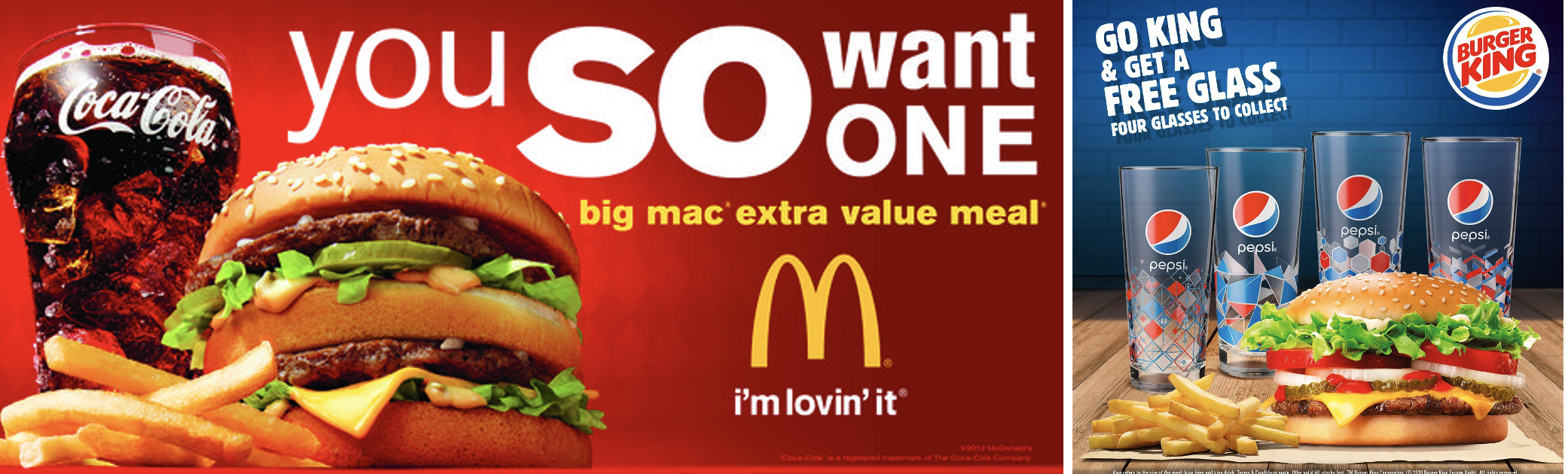
This is a type of social media marketing that focuses on convincing a few influential people in a market so that they endorse the product or service and ultimately spread the word to a broader audience.
In 2012 McDonald’s recruited mom bloggers to promote a healthier happy meal (smaller fries portions and fruit snacks). They chose moms because they are customers and many of them have loyal followings (either blogging or in social media channels). They were given privileged access ”behind the scenes” and perks. All the blog posts they wrote describing the experience were positive.
There are all kinds of rules of thumb that can be applied to successfully market a restaurant, including:
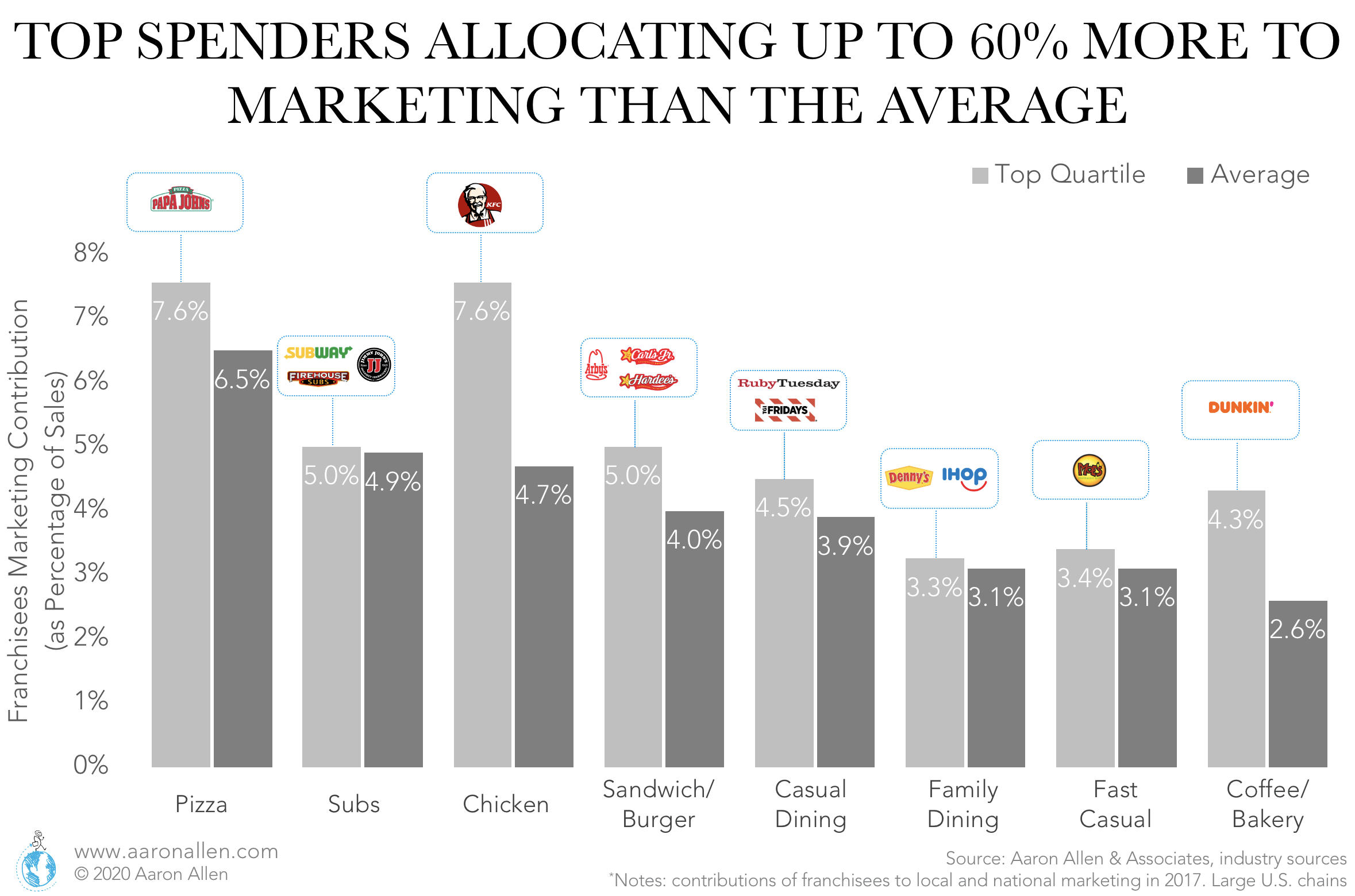
Based on franchisee contributions, the largest chains allocate an average 3.9% of sales to marketing. Quick-service restaurants are the category with the highest average spend, allocating a median of 4.6% of sales to marketing efforts. Casual dining is at 3.5%, and fast-casual restaurants at 3% of marketing spend. Though this data is specific to large chains in the U.S., we’ve seen similar numbers across numerous clients globally.
As the battle for diners intensifies, top restaurant chains are paying even closer attention to their marketing efforts. Some of the largest pizza chains — such as Papa John’s, Domino’s, and Little Caesars — have the heaviest spend, reaching more than 6% of sales.
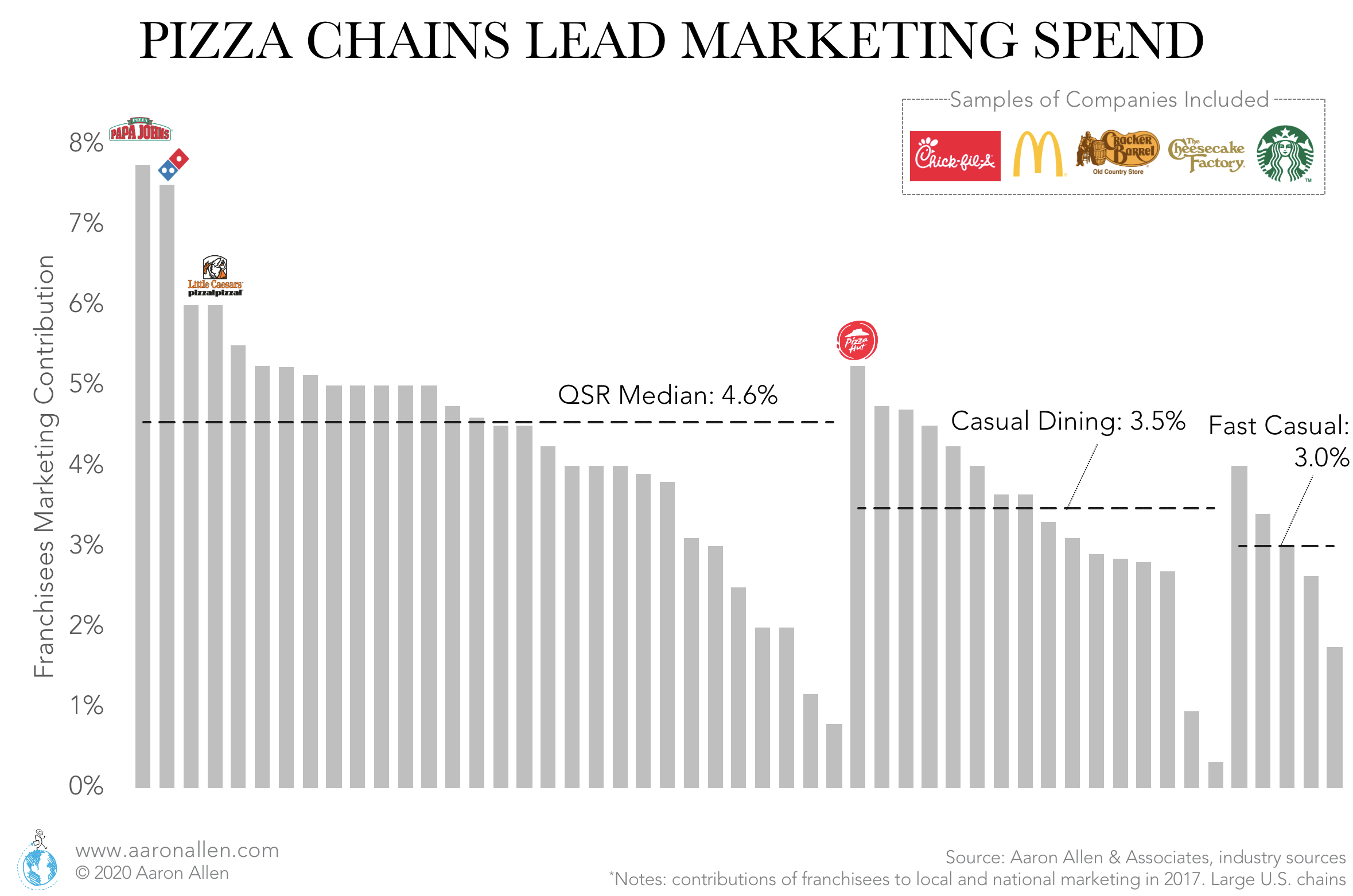
The allocation of restaurant franchisee contributions to marketing also varies across segments. Coffee/bakery systems have the lowest rates, with franchisees adding an average of 2.6% of sales to corporate coffers, while pizza franchisees contribute an average of 6.5% of sales.
It’s also a good idea to allocate this money proportionally to your sales volume. Meaning, if July is your busiest month, you should spend a proportionate amount on your restaurant’s marketing budget in that month. Fish where the fish are biting. Some restaurant owners look at slow periods and think that’s when they need to spend money to drive sales, so they spend a big chunk of cash trying to build a happy hour business and forgo building on top of their busy periods.
Fact is, there is a reason people aren’t coming in from 3:00 PM–5:00 PM and you’ll be sending valuable marketing dollars down a black hole if you try to build this period. There are nearly one million restaurants in the United States and probably only 2% of them are busy from 3:00 PM–5:00 PM. Marketing can’t change behavior; it can only influence existing behaviors. Spend your marketing dollar where it will have the best return for your restaurant.
For restaurant chains, the majority (somewhere in the range of 80%–90%) of the marketing budget is spent against new trial: getting new customers to visit for the first time. This is the least effective place to spend your money. Most new trial efforts are spent against mass media advertising, which is costly and has a dismal return on investment. New customer acquisition is 7–10 times more expensive than building restaurant sales through increased frequency, check average and party size.
If you cannot prove the dollars you spend persuade people to do business with you, you should not advertise. If you can’t see a direct relationship between marketing and increased sales, your marketing isn’t working. Marketing campaigns need to have measurable results.
Regardless of age, income, education, culture, race, or background, we are all conditioned to notice what’s different. That’s just one more reason to focus on being “different from,” instead of “better than” competitors – betterness is subjective, differentiation is objective. Brands and individuals should focus on communicating their differences, not similarities.

The fact that marketing a restaurant is not easy is part of its competitive advantage. Effective marketing in restaurants isn’t easy. It takes a lot of careful research, analysis, and testing. It’s also ever-evolving, which makes it even more difficult to master.
Performing periodic, top-to-bottom audits of marketing objectives, strategies, and activities pays off in the long term. However, it can be difficult to narrow the focus. Those who perform marketing audits shouldn’t just be able to answer “What are we doing?” but also “What should we stop doing?” and “What will we need to do in the future?” You can learn more about how we can help here.